Natural catastrophes can occur at any time, so being ready is crucial. Building resilience through home renovation projects is one way homeowners can take precautions to protect their homes and loved ones. By making these investments, homeowners can lower their risk of harm and improve their likelihood of recovering swiftly in the event of a natural disaster.
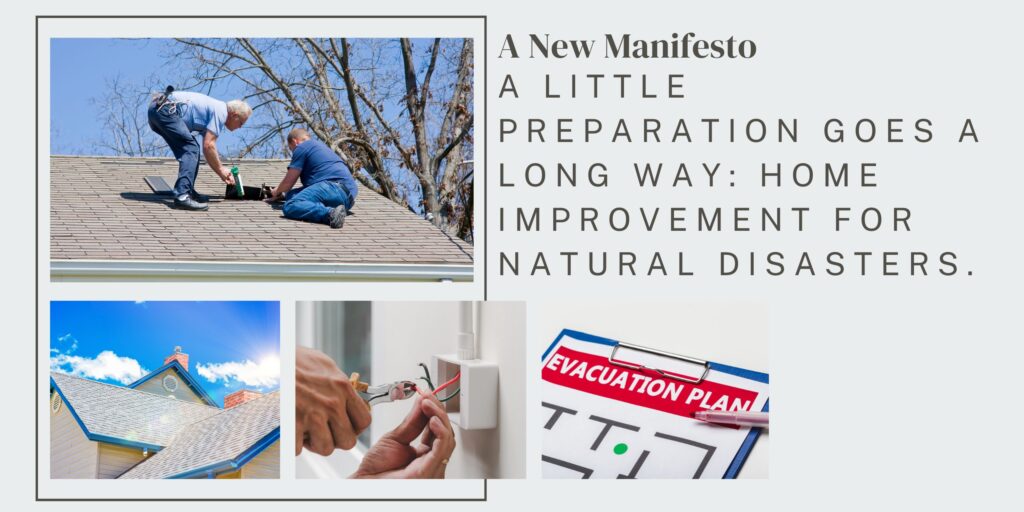
Here are some suggestions for home repair to help you get your house ready for natural disasters:
Strengthen Your Roof: The first line of protection for your home from wind, rain, and debris is its roof. High winds or torrential rain can quickly damage your roof if it is in bad condition. By doing routine inspections of your roof and quickly fixing any damage or leaks, you can increase its durability. You can also install metal connections or hurricane straps to assist keep the roof attached to the rest of the building during strong winds.
Secure Your Windows and Doors: In the event of a storm, high winds may easily smash your windows and doors, resulting in damage and the entry of water into your home. Impact-resistant windows and doors can help keep water out and shield your property from flying objects. If replacing windows and doors is not an option, think about adding storm shutters or bolstering the frames of current windows and doors with metal or plywood.
Upgrade Your Electrical System: If power lines are down or otherwise compromised during a natural catastrophe, electrical fires pose a significant risk. The risk of electrical fires can be decreased and your home can continue to function in the event of a power outage by upgrading your electrical system to incorporate surge protectors, ground fault circuit interrupters (GFCIs), and whole-house generators.
Installing a sump pump can help avoid water damage to your home’s basement and foundation in locations that are prone to floods. A sump pump reduces the possibility of flooding and water damage by moving water out of your basement and away from your house.
Create a Home Inventory: In the event of damage or loss, it’s critical to maintain an accurate inventory of the contents of your home. You may file insurance claims more efficiently and properly with the use of a home inventory, which will also guarantee that you are compensated for all damages in full. A video or photo inventory of your possessions might be made, and it should be kept in a safe place like a safety deposit box or cloud storage.
Plan for Evacuation: Having a plan in place will help you and your family stay safe if a natural disaster necessitates evacuation. Identify escape routes, emergency contacts, and necessary supplies in a family emergency plan. Make sure you have a “go bag” containing essentials like identification and insurance policies, as well as enough food, water, and clothing to survive for at least three days.
Homeowners can strengthen their homes’ resilience and lower the chance of damage from natural catastrophes by implementing these measures. It’s crucial to keep in mind that no house is totally disaster-proof, and that being prepared and having a plan in place is the key to keeping safe in an emergency.
Additionally, homeowners should confirm with their insurance companies that their policies adequately cover both their homes and their possessions and that they include coverage for natural disasters. For some types of natural disasters, such floods or earthquakes, supplementary coverage or riders may be required.

Maintaining your home and property all year is a crucial part of developing resilience. Regular maintenance can help lower the chance of damage after a natural catastrophe, such as gutter cleaning and tree trimming. Additionally, it’s critical to keep knowledgeable about potential concerns in your neighborhood and take precautions to reduce those risks. For instance, if your house is near a flood plain, you might want to think about elevating it or installing flood vents.
Last but not least, it’s critical to keep in mind that natural catastrophes can be unpredictable and that no amount of planning can entirely remove the possibility of harm or loss. However, homeowners can improve their chances of staying alive and recovering fast in the wake of a disaster by taking measures to develop resilience and prepare for emergencies.
In conclusion, strengthening resilience through home repair initiatives can assist homeowners in reducing the risk of damage and loss and helping them get ready for natural disasters. You can aid in protecting your home and family in the event of a disaster by strengthening your roof, fastening your windows and doors, upgrading your electrical system, installing a sump pump, making a home inventory, and making an evacuation plan. Always remember that being ready, planning, and acting before a natural disaster strikes are the keys to staying safe during one.